

Small business owners often ask one important question before investing online: website vs social media for business, which option actually helps growth? With limited budgets and time, choosing the right digital foundation matters more than ever.
Social media feels fast and easy. A website feels formal and technical. However, business growth depends on trust, visibility, and long-term control. In this blog, we will break down both options clearly and help you decide what truly works for your business in 2026 and beyond.
Understanding the Core Difference Between Website and Social Media
Before comparing results, it is important to understand what each platform is designed to do.
A website is a digital asset you own. It represents your brand, services, and credibility in one controlled space.
Social media platforms are rented spaces. They help you reach people, but they control visibility, rules, and reach.
Therefore, the website vs social media for business debate is really about ownership versus dependency.
What a Website Does for Business Growth
A professional website works like your online office. It stays open 24/7 and speaks for your business even when you are offline.
Key Benefits of Having a Website
- Full control over branding and content
- Higher trust and credibility
- Better visibility on Google search
- Strong lead generation potential
- Long-term return on investment
In addition, websites scale with your business. You can add pages, services, blogs, landing pages, and automation as you grow.
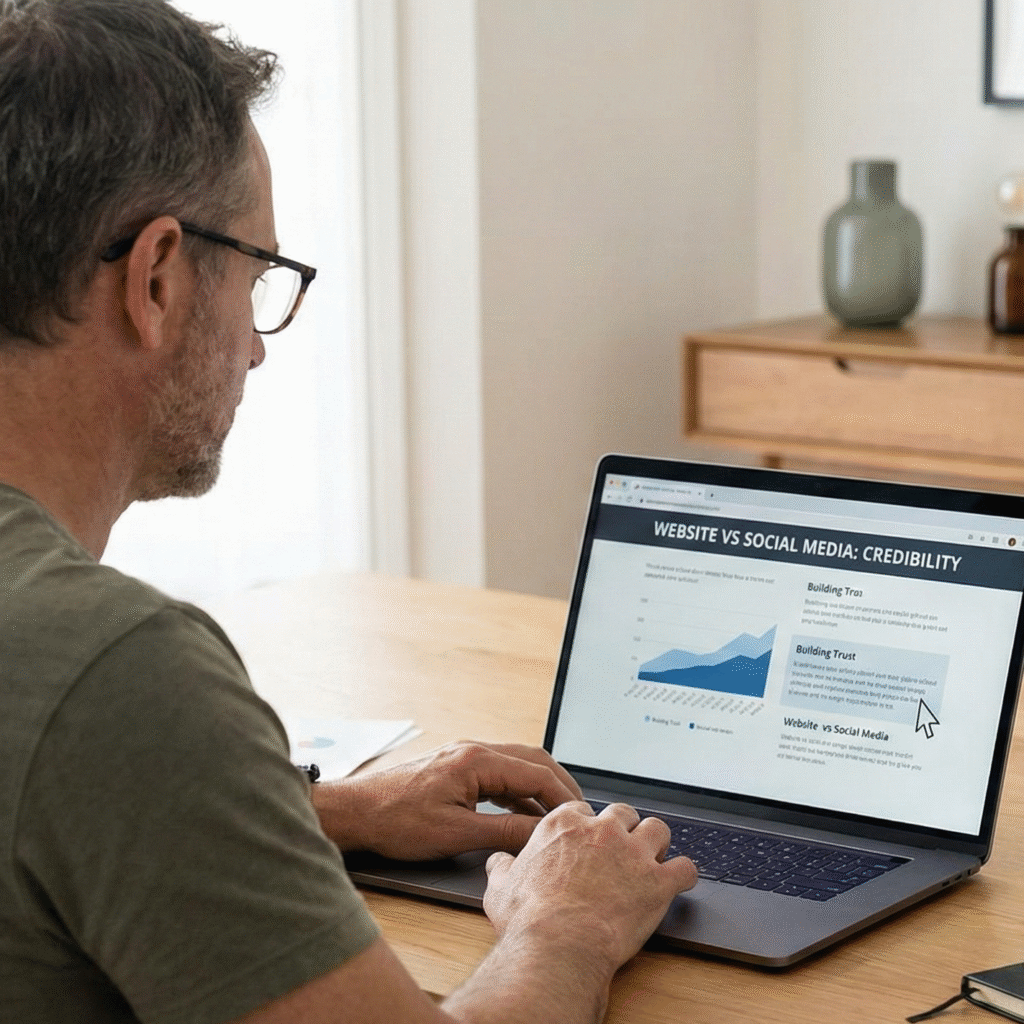
What Social Media Does Well for Businesses
Social media platforms are powerful for visibility and engagement. They help businesses stay connected and relevant.
Key Benefits of Social Media
- Quick audience reach
- Easy content sharing
- Direct communication with customers
- Brand awareness and engagement
However, reach depends heavily on algorithms. A post that performs well today may fail tomorrow.
This is why relying only on social platforms carries risk.
Website vs Social Media for Business: A Direct Comparison
Let’s compare both across the most important growth factors.
Ownership and Control
- Website: You own everything—content, data, design
- Social Media: Platform owns the audience and reach
Trust and Professionalism
- Website: Builds authority and seriousness
- Social Media: Often seen as informal or temporary
Search Visibility
- Website: Ranks on Google through SEO
- Social Media: Limited search discoverability
Lead Generation
- Website: Forms, bookings, funnels, automation
- Social Media: Mostly manual conversations
Therefore, websites drive structured growth, while social media supports visibility.
Why Businesses That Rely Only on Social Media Struggle
Many small businesses start on Instagram or Facebook and stop there. Over time, they face common issues.
- Sudden drop in reach
- Account restrictions or bans
- Low conversion rates
- No searchable presence on Google
When customers search your business name and do not find a website, trust drops instantly.
The SEO Advantage: Why Websites Win Long-Term
Search engines still rely on websites to show results. Google does not rank Instagram profiles the same way it ranks websites.
With proper SEO, a website can:
- Attract high-intent visitors
- Generate organic leads
- Reduce ad dependency
According to Google Business insights, customers are more likely to contact businesses with a clear web presence and accurate information.
This makes SEO a strong reason why the website vs social media for business debate favors websites for long-term growth.
Can Social Media Replace a Website?
The short answer is no.
Social media can support marketing. It cannot replace:
- Detailed service pages
- Legal pages and trust signals
- Conversion-optimized landing pages
- Business credibility
Even successful social-first brands eventually build websites to scale.
The Smart Strategy: Using Website and Social Media Together
The real solution is not choosing one over the other. Growth happens when both work together.
How They Complement Each Other
- Social media brings attention
- Website converts visitors into leads
- Website builds trust
- Social media builds relationships
This combined approach delivers stable and scalable growth.
👉 Get a Free Website Consultation
Website vs Social Media for Business Growth Stages
Different stages require different priorities.
For New Businesses
- Start social media for visibility
- Build a basic website early
For Growing Businesses
- Focus on SEO and lead generation
- Use social media to drive traffic
For Established Businesses
- Optimize website for conversions
- Use social platforms for branding and remarketing
In every stage, the website acts as the foundation.
Real Impact on Sales and Leads
A website allows you to guide users clearly.
- Clear call-to-actions
- Structured service explanations
- Customer testimonials
- Contact forms and booking tools
Social media often lacks this structure, leading to lost opportunities.
Why Professional Websites Convert Better
Design, speed, content, and user experience all matter. A professionally built website creates confidence.
At Attari Soft Solutions, we see businesses increase inquiries simply by moving from social-only presence to a conversion-focused website.
If you want reliable growth, investing in Website development services is a smart step.
Common Myths About Websites for Small Businesses
“Websites are too expensive”
Modern websites are affordable and scalable.
“Social media is enough”
It is not stable or owned by you.
“My business is local”
Local businesses benefit the most from Google searches.
Final Verdict: Website vs Social Media for Business
So, website vs social media for business, which is better?
Social media helps people discover you.
A website helps people trust you.
Growth needs both—but the website must come first.
If you want sustainable growth, predictable leads, and a professional brand image, your website is non-negotiable.